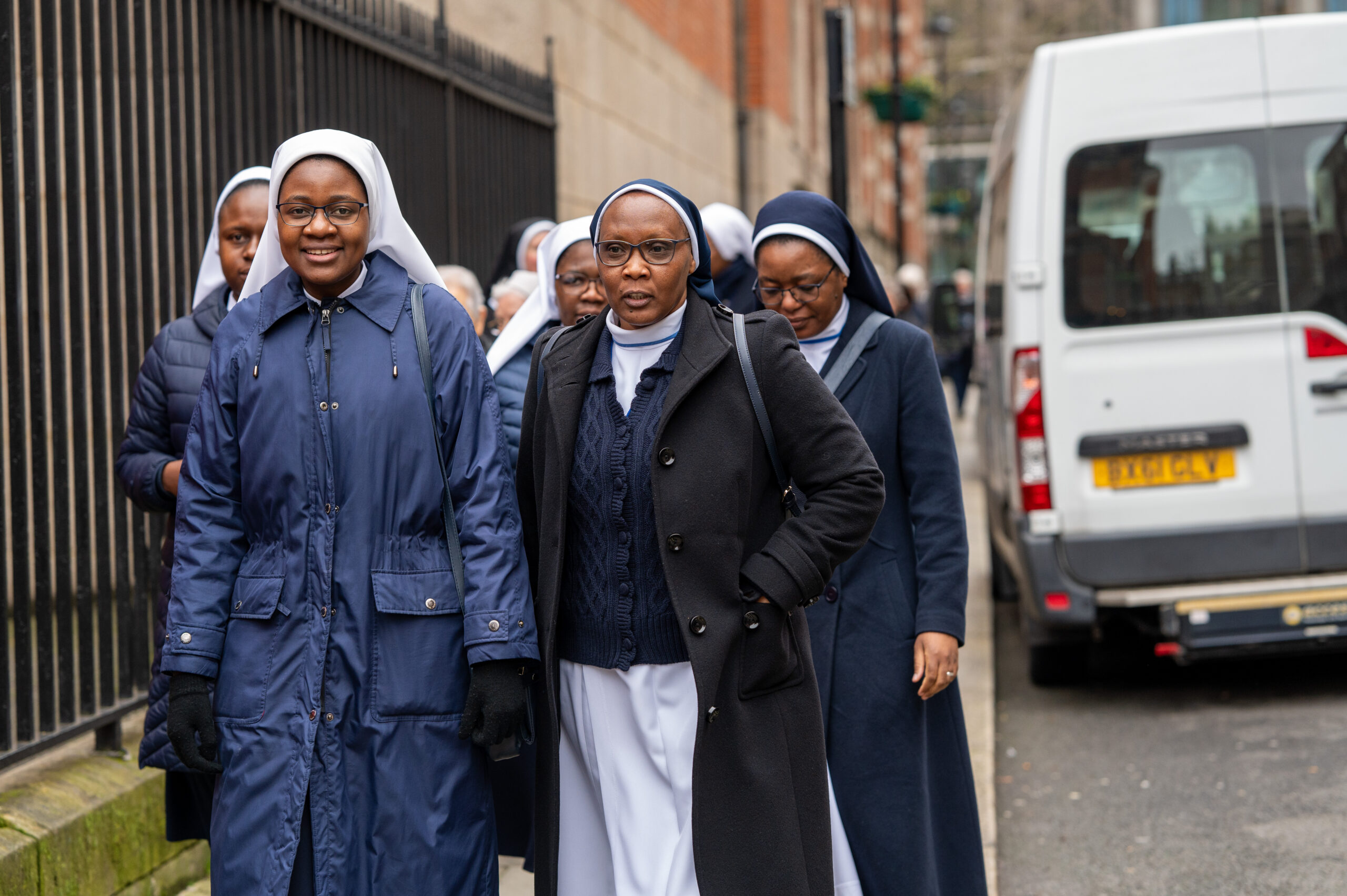

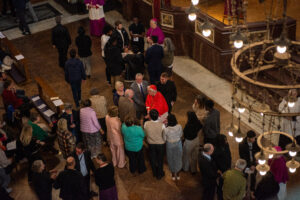
Catholics often use the term ‘religious’ to describe those who have taken vows of poverty, chastity (or more precisely: lifelong celibacy) and obedience. The most helpful phrase to use is ‘consecrated life’. This is the way of life embraced by all those who dedicate themselves to the Lord by making these lifelong vows when they are recognised and accepted by the Church. These vows are sometimes called the ‘evangelical counsels’.
Every Christian, of course, is dedicated to the Lord, and has promised through baptism to give his or her life to him. Every Christian is called to live a life of holiness. But those who consecrate themselves in this way are responding to a call to live as Christ lived, and to model their lives more directly on his own way of life – poor, chaste, and obedient – making their hearts more free for prayer and service. They show us more clearly something about the concrete reality of Christ’s love. They also give us a glimpse of the purity of the love we all hope to share in heaven, when our lives will be uncluttered by possessions or family responsibilities, and our hearts will be solely centred on God. The consecrated life includes monks and nuns in enclosed communities, religious brothers and sisters in active communities, and also many others who live alone or who live and work ‘in the world’ who have taken the three vows.